





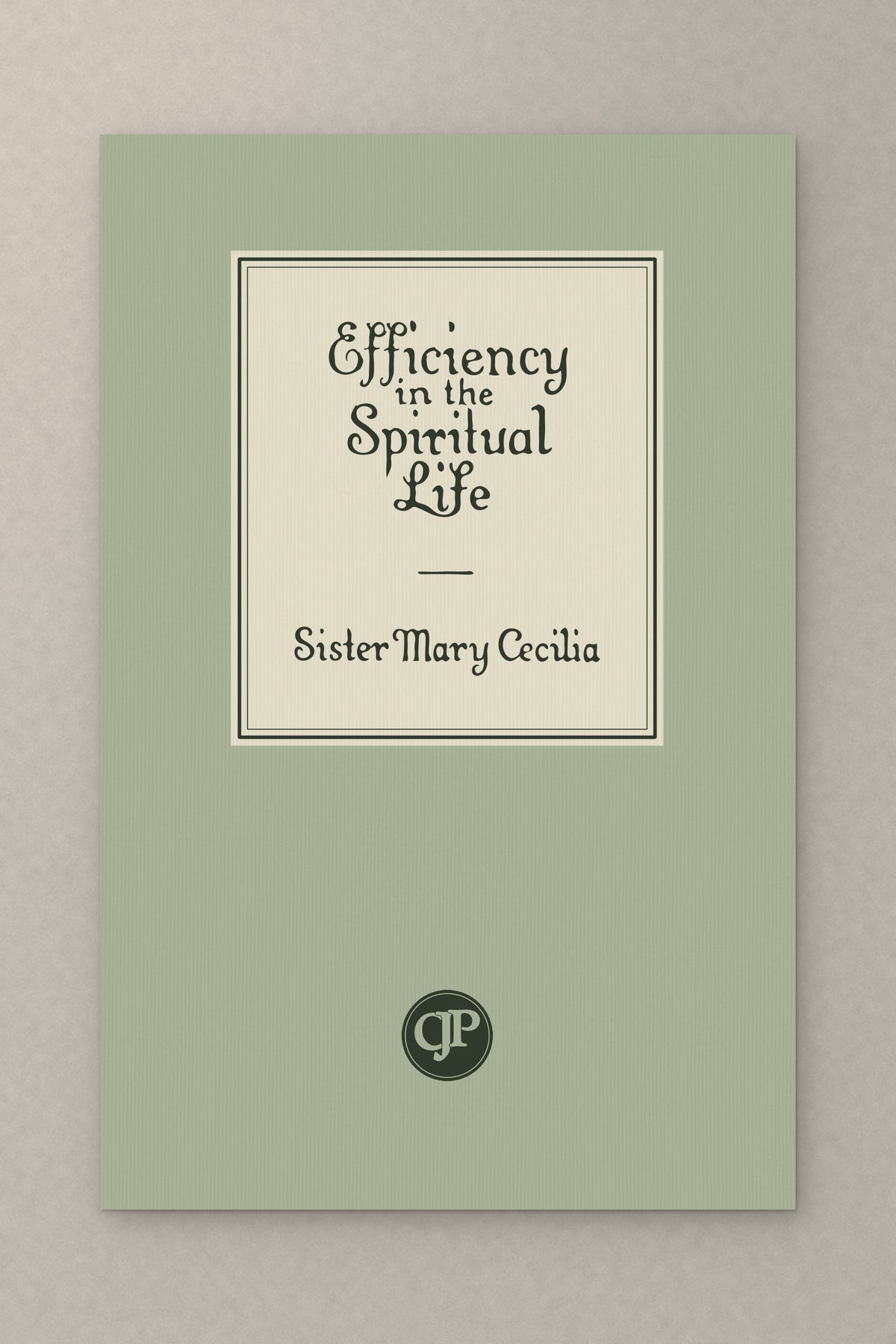


Efficiency in the Spiritual Life
Efficiency in the Spiritual Life
“The children of this world are wiser in their generation than the children of light.”
✠
A short cut to heaven. The Little Flower once wrote that she wanted “a lift to go up to Jesus, for the stairs of perfection are too steep.” An Ursuline nun in Kansas had the same longing. She had been studying an efficiency course by Harrington Emerson of New York, and she watched how hard the men of business worked for money. They kept careful records, planned every hour, and drilled until the work became habit. During her retreat in 1917, the retreat master remarked that St. Ignatius seemed to use a principle of modern efficiency in his meditation on the Three Degrees of Humility. That was enough. She set out to turn every one of those principles toward God.
The business of the soul. Chapter by chapter, the tools of the office become the tools of holiness:
- records become the daily examen
- planning becomes meditation, “the great planning time”
- schedules become a rule of life that wastes none of the day’s little “inbetweenities”
- the efficiency reward becomes heaven itself
The book closes with a short rule for each day of the week, compiled to help a soul persevere in the fervor of a good retreat.
“That place which has been vacant from all eternity that we might fill it . . . Will I leave my place empty and be an eternal disappointment to my God and Father?”
— Sister Mary Cecilia
Plain and bracing. She does not let the reader off easily. “Selfishness is the longest way to heaven,” she writes. And the soul that only hopes to slip “through the gate” is speaking “the language of a lazy soul.” Yet she teaches as a good sister teaches children. Remember how badly you once wanted a bicycle, how you studied the catalogues and dreamed of it day and night? That is how we must learn to want heaven.
For busy lives. She wrote chiefly for religious, but she hoped it would also help “sincere Christians striving to lead a holy life in the midst of the world.” For anyone whose days are full, this little book shows how to make the ordinary hours count for God.
— ABOUT THE AUTHOR —
Sister Mary Cecilia was an Ursuline nun of the Convent of Our Lady of Lourdes in Paola, Kansas, a daughter of the teaching order founded by St. Angela Merici. She built this book from notes she had gathered since her novice days, from retreats, sermons, conferences and spiritual reading. Father Eugene Magevney, S.J., encouraged her and promised to review the manuscript, but God called him Home before he could. She dedicated the book to the memory of her father and mother, and it was first published in 1921 by Frederick Pustet.
❦
A paperback of 165 pages, 5½ × 8½ inches,
newly typeset from the 1921 Frederick Pustet edition.
Couldn't load pickup availability
